Published
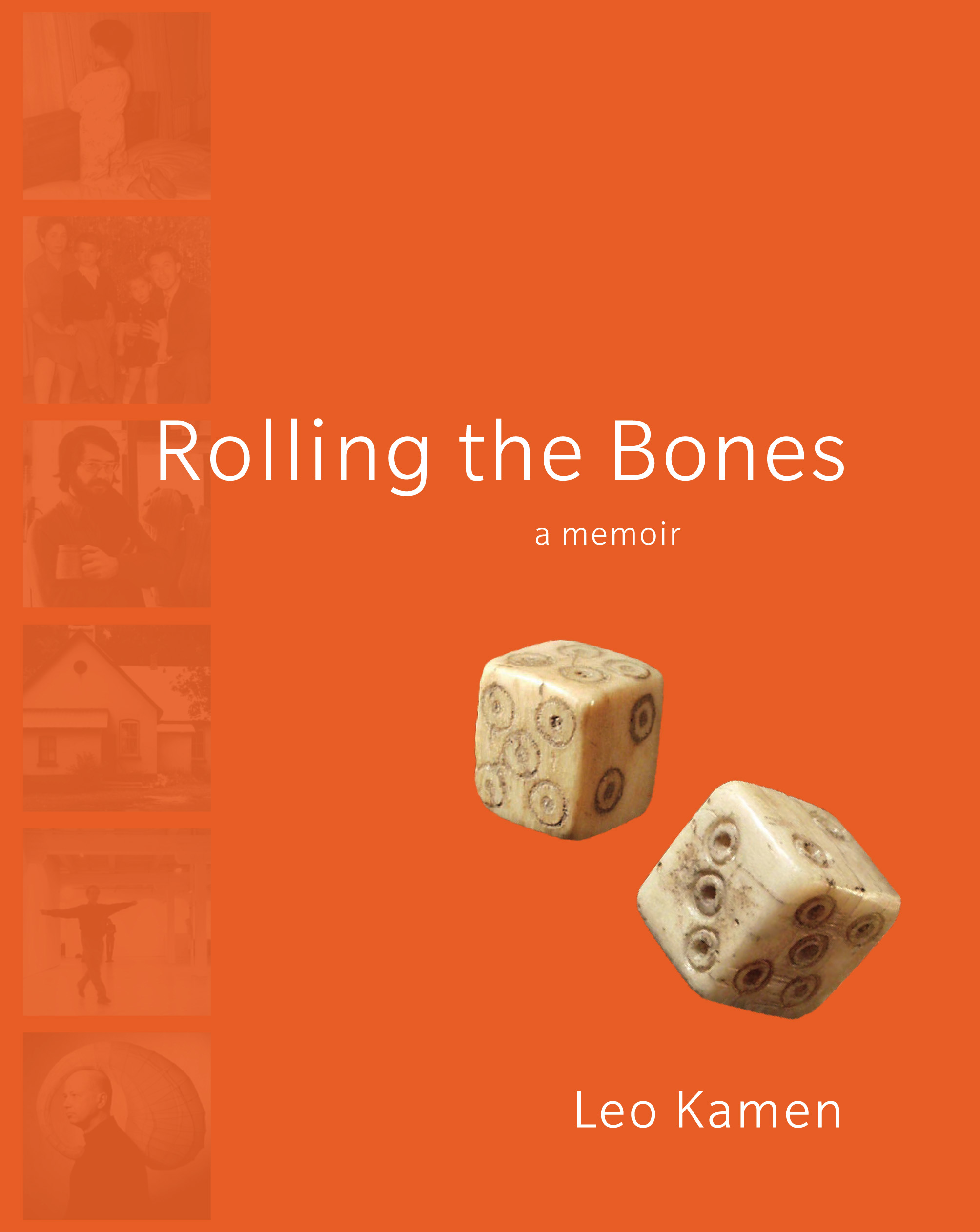
Rolling the Bones was published in 2010. The memoir chronicles the author's improbable journey from the working-class streets of Ottawa to becoming a prominent art dealer in Canada. A lack of money never seemed to stand in the way. Success depended on a blend of several ingredients: a fighting spirit; perseverance in the face of great odds; a delight in beauty; willingness to fail time and time again; incessant curiosity; and faith in what always felt to be right and true.
Manuscripts
Blue, Surrounded by Darkness (118K) is a large canvas, a magic realist adventure set in Las Vegas that operates on both a human and mythic scale, a satire and rumination on gambling, philosophy, the power of storytelling, and the impact of chance on our lives. The book takes us on a rollicking ride into the surreal. Among its many colorful characters, the Navajo moon god, a coven of witches, an evil individual known as The Vulture, a wisecracking ex psychiatrist who is also a gambling maestro, a Vegas hitman obsessed with sculpting a bust of Mengele, and at their center, Seymour, a failed artist. All commit themselves to playing an ultimate game of craps that will determine their destinies.
Herring Today, Gone Tomorrow (102K) is comparable to work by Martin Amis by way of Joyce Carey's Horse's Mouth. A sendup of the Toronto artworld circa 1990. A renowned, highly principled and yet irascible and unkempt painter is surreptitiously commissioned by his best friend, a psychiatrist, to paint a portrait of a recently deceased art critic he reviled. By accepting, the artist must negotiate between his passion for truth in art and his loathing for the artworld.
Animals Spotted While Running (96K) is a faux memoir, the author's love letter to Montreal and its dreamlike zaniness. A naive Anglais flees Toronto in 2015 for the promise of a new life in La Belle Province. Little does he know the strangeness that awaits him. The story of his arrival is a satire, a humorous, surreal romp around St. Henri, the quartier into which he settles to become a reporter for L'Orignal Blanc, the community newspaper. As he ponders his failed marriage and the meaning of his past, he struggles with the fragility of his memory and his unspooling sanity, both mitigated by the wonder of the Quebecois community he adopts. Over the course of one fateful summer his world crumbles, and he finds himself released from his stodgy English presumptions.

Welcome to the MAIS: How to Become Your Best Idiot Self (77K) (MAIS is an acronym for Mutual Appreciation of our Idiocy Society) wrestles with the question of why we are so stupid. The book is an absurdist, cult/self-help sendup rooted in a deeply serious set of philosophical principles that approach the question from different angles. It proposes that stupidity—infinitely common, clever, and adaptable—is the foundation of all human awareness. In order to escape it, we are advised to become our Best Idiot Selves, the highest level of consciousness—Idiotellement—a human being can achieve. The book is set in San Francisco in the 1970s. We follow Doctors Boris Borschnikoff and Thalia Spencer as they travel the globe researching the fundamentals of stupidity and the history of The Maisonnaise, an ancient book of scripture that Maizolytes use in their quest for Idiotellement.
Like You're Something New (81K) is a quirky counterculture tale set in 1979. Little Blintz, an artist whose fantastical photographs rely on the dark, strange Russian fairy tales his babushka told him as a child, is anxious to break the spell of inertia that has befallen both his career and Thoreau, his small Ontario town. In order to be released from the spell, he concocts a grand scheme to photograph his friends in the nude so he can recreate The Garden of Earthly Delights as a massive, five-by-twenty-foot photo collage. On his quest, a series of critical moments emerge as each participant in the project is revealed in an unlikely yet truthful fashion. They take Little Blintz into their confidence and he becomes their pivot and ground, a place of quiet acceptance and change. The final work is unveiled in a grand ceremony at the Claymore Arms, their local tavern, and everyone is released into their unexpected futures.
To survive being an art dealer during the 1980s was a formidable challenge. How I'm Going to Murder my Mother: Odyssey of an Art Dealer (85K) takes a satirical, yet serious look at the struggle through the eyes of gallery owner Samuel Schecter in his fight for authenticity. Marshalled against the greed and pomposity that was the New York art scene at the time, he undertakes a quest to understand beauty and meaning both in art and in his life. Consequently, a philosophical inquiry underlies the unfolding plot of the novel. On his journey, Sam becomes enamored with Catherine, the artist whose exhibition of murdered rag dolls (thus the title of the book) saves the gallery. Ivan Kropotkin, a wily Uptown art dealer, teaches Sam how to take risks by inviting him on a trip to Las Vegas to shoot craps, only to steal the rising young art star from him. To help survive his ordeals Sam's best friend, old Solomon Gorky, offers words of wisdom to keep him from tumbling into the abyss. Throughout the book the descriptions of people, their look and actions are often exaggerated and funny; humor is the foreground that offers an overriding counter to the book's metaphysical speculation and human drama.